Securing your property requires a deliberate pest control service Bryan homeowners can rely on to stop destructive insects and rodents before they compromise living spaces. High humidity from the Brazos River basin, shifting Blackland Prairie clay, and fluctuating East Texas weather drive pests indoors across every season of the year.

A professional pest control service in Bryan is a specialized residential defense program that identifies biological entry points, eliminates active insect and rodent infestations, and creates a residual exterior perimeter barrier around Brazos County structures.
Every service reflects the same meticulous attention to detail — whether it's a single job or a larger pest control service project across Bryan.
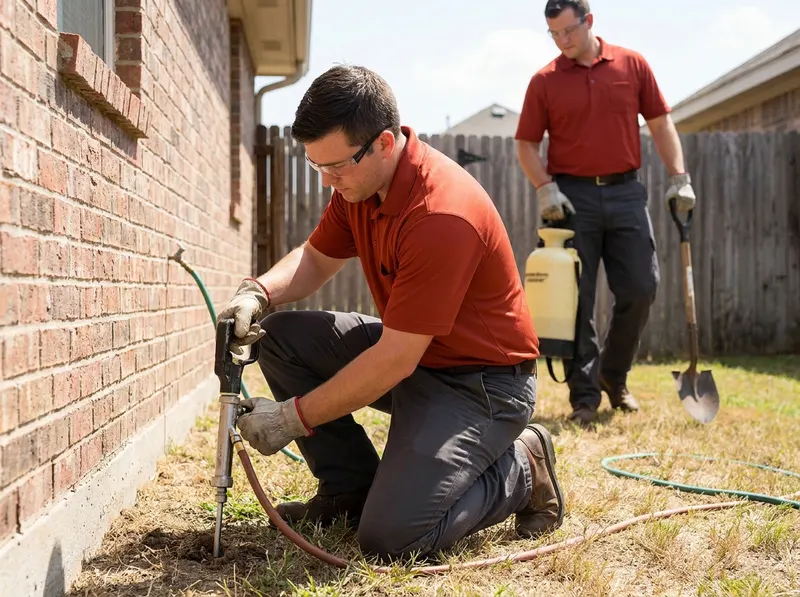
Subterranean termites represent the most destructive structural wood-destroying organism in Brazos County, nesting deep within moist subterranean soil profiles and tunneling upward through foundation expansion joints, slab cracks, and plumbing voids. Professional subterranean termite defense involves establishing a continuous chemical barrier around the exterior foundation perimeter using non-repellent termiticides. Technicians trench the soil adjacent to foundation grade beams, rodding liquid termiticide down to the footing level to ensure complete soil saturation. For properties built on concrete slabs with integrated plumbing penetrations, specialized precision drilling through exterior concrete walkways or patio pads allows deep sub-slab liquid injection. As worker termites forage through the treated soil zone, they unknowingly ingest and transfer the non-repellent active ingredient throughout the subterranean colony, resulting in total colony elimination over a 60 to 90-day biological cycle. Annual structural monitoring and non-invasive moisture meter scanning verify that the subterranean protective barrier remains intact against recurring swarms.
View details →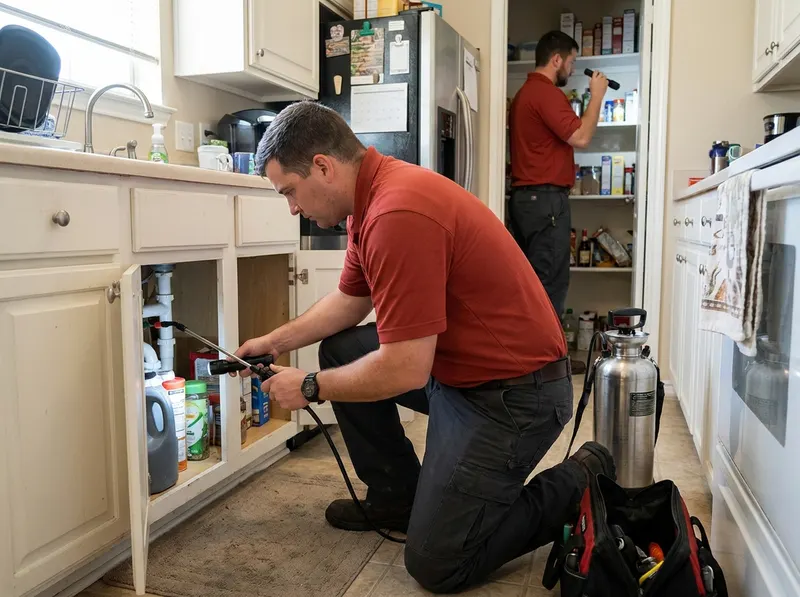
Cockroach infestations in residential spaces typically involve two distinct biological challenges: interior German cockroach infestations within kitchens and utility rooms, or exterior American and smoky brown peridomestic roaches entering through weep holes, attic vents, and doorway thresholds. Comprehensive cockroach cleanouts begin with an exhaustive structural inspection of warm harborages, including the undersides of refrigerator motor housings, dishwasher compartments, electrical outlet boxes, and cabinet hinges. Eradication combines insect growth regulators (IGRs) that arrest juvenile nymph development with non-repellent micro-encapsulated baits and target dry flowable dust formulations injected into wall voids. Residual barrier bands are applied along interior baseboards and exterior perimeter stem walls to intercept crawling adults. Technicians eliminate active populations, remove egg capsules (oothecae), and provide homeowners with moisture reduction protocols for plumbing traps to permanently halt reproductive cycling.
View details →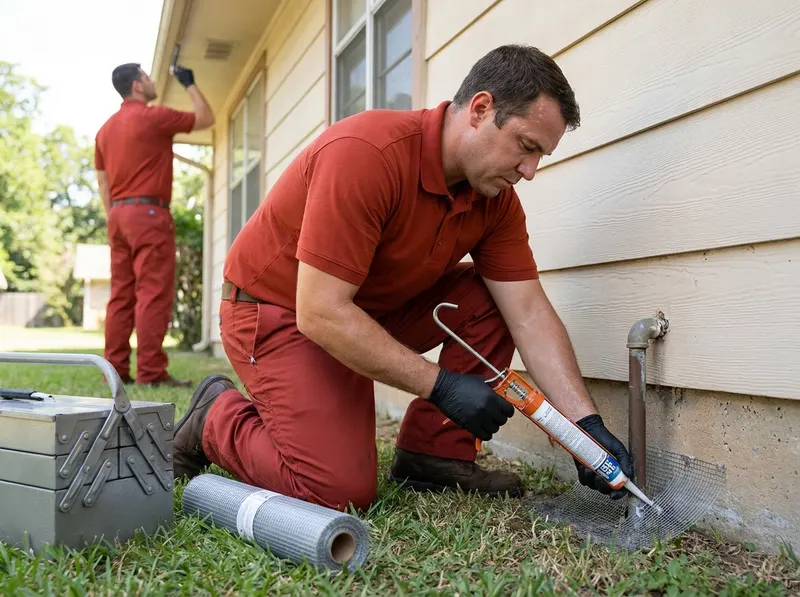
Roof rats (Rattus rattus) and house mice (Mus musculus) inflict severe structural damage across residential attics by gnawing on thermoplastic electrical wiring insulation, puncturing flexible HVAC ductwork, and compressing fiberglass batt insulation with nesting runways and hazardous fecal contamination. Rodent defense executes a permanent three-stage structural protocol: full-building exclusion, targeted interior mechanical trapping, and exterior population suppression. Technicians inspect rooflines, soffit returns, gable louvers, AC chase lines, and brick weep holes, sealing every vulnerability greater than one-quarter inch using heavy-duty 19-gauge galvanized steel hardware cloth, metal flashing, and expanding elastomeric structural foam. Inside attic spaces and crawlspaces, snap traps and multi-catch mechanical devices are deployed strategically along identified sebum-marked travel runs to extract active rodents without using interior rodenticide baits that cause secondary odor and carcass issues. Once trapping verifies zero attic activity, technicians sanitize contaminated insulation pathways to neutralize pheromone scent markers.
View details →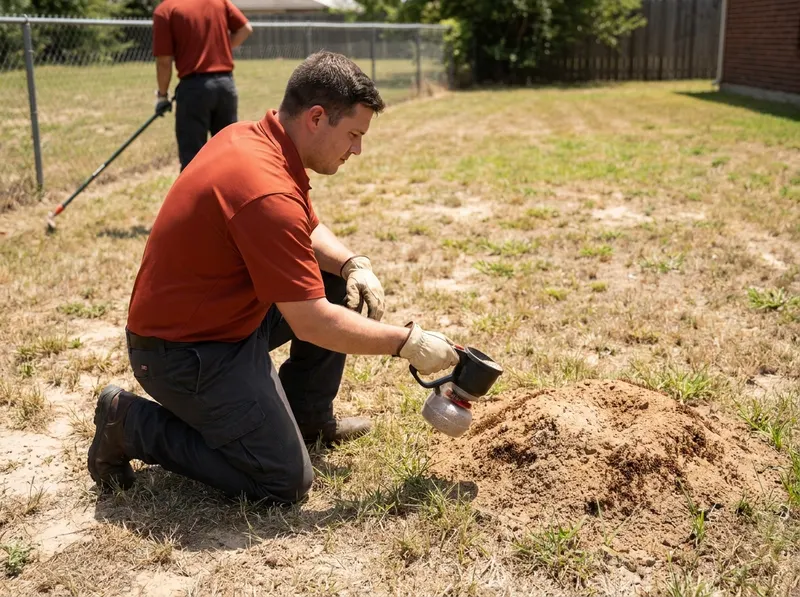
Red imported fire ants (Solenopsis invicta) construct extensive subterranean colony networks throughout residential lawns, flower beds, and electrical transformer enclosures, inflicting painful stings on family members and domestic pets while disturbing turf root architecture. Professional fire ant management utilizes a comprehensive two-step broadcast protocol across the entire property rather than relying solely on surface mound spraying, which often causes the colony queen to relocate deeper underground. Technicians distribute highly palatable micro-encapsulated insect growth regulator baits across turf areas during active morning or evening foraging periods. Worker ants transport the bait down into subterranean chambers, feeding the active ingredient directly to the reproductive queen to halt egg production and collapse the colony within several weeks. High-pressure perimeter liquid drenching is simultaneously applied to high-risk mounds bordering foundation edges, driveways, and children's play areas for immediate localized knockdown and protective suppression lasting up to six continuous months.
View details →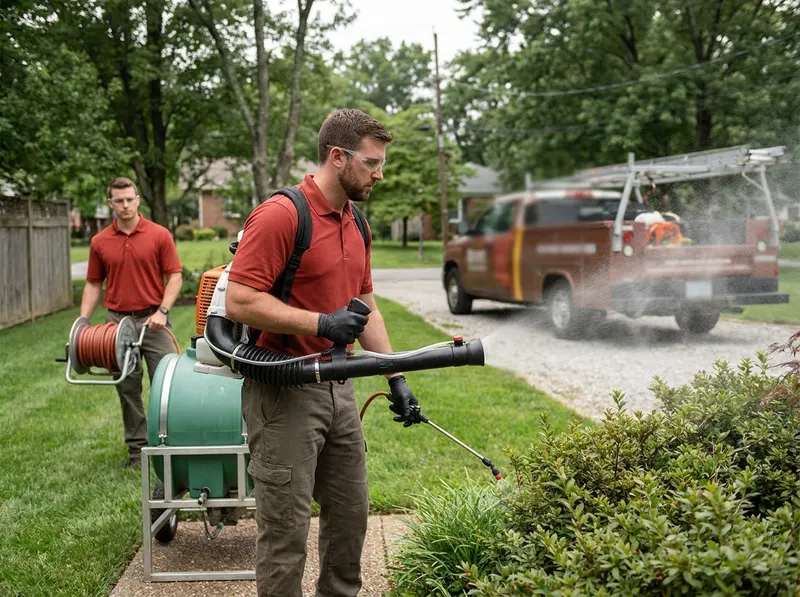
The humid climate of the Brazos Valley creates ideal breeding conditions for Aedes, Culex, and Anopheles mosquitoes in shaded residential landscapes, dense evergreen ground cover, clogged gutter troughs, and poor lawn drainage swales. Mosquito reduction programs utilize multi-action misting applications combined with biological larvicide management to break adult and larval reproductive stages. Technicians utilize backpack misting blowers to apply botanical-derived, micro-encapsulated residual formulations directly to the underside of broadleaf foliage, under patio decking, along fence lines, and within dense foundation shrubbery where adult mosquitoes harbor during daytime heat. Specialized water-soluble biological larvicide dunks containing Bacillus thuringiensis israelensis (BTI) are placed in low-lying drainage catch basins, birdbaths, French drain outlets, and standing water areas to eliminate mosquito larvae before they pupate into biting adults, significantly reducing vector-borne disease transmission risks.
View details →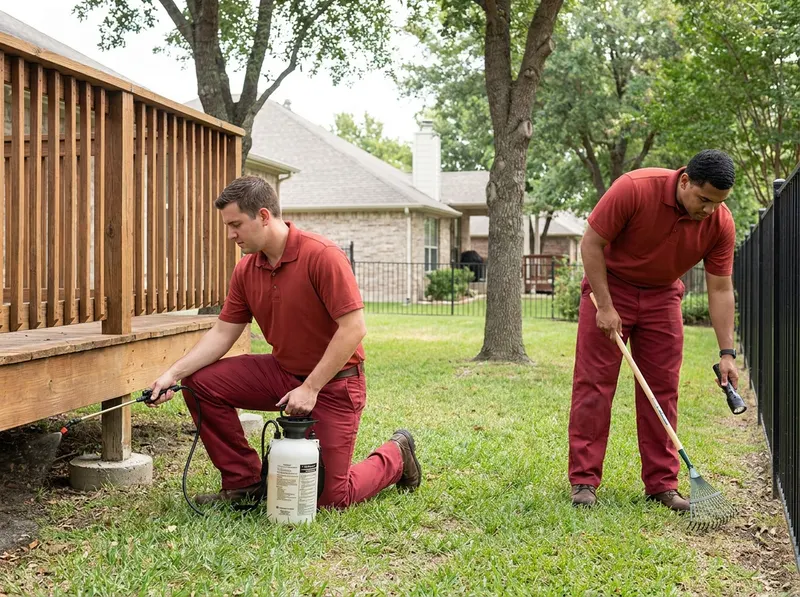
Fleas (Ctenocephalides felis) and brown dog ticks (Rhipicephalus sanguineus) represent severe parasitic threats that multiply rapidly in warm residential carpets, upholstery, hardwood floor crevices, and shaded outdoor resting runs frequented by pets. Successful elimination requires simultaneous indoor and outdoor eradication targeting both mature parasites and developing pupae. Indoor treatments utilize precision broadcast surface applications containing dual-action adulticides and photostable insect growth regulators across carpet fibers, pet bedding areas, and sub-furniture perimeters, halting the development of flea larvae inside cocooned stages. Outdoor treatments focus on shaded perimeter zones, crawlspace openings, and landscape mulch beds where high humidity protects developing tick nymphs and adult fleas. Technicians coordinate applications with pet veterinary treatment schedules, providing comprehensive sanitation guidelines to guarantee complete disruption of the 21-day flea life cycle.
View details →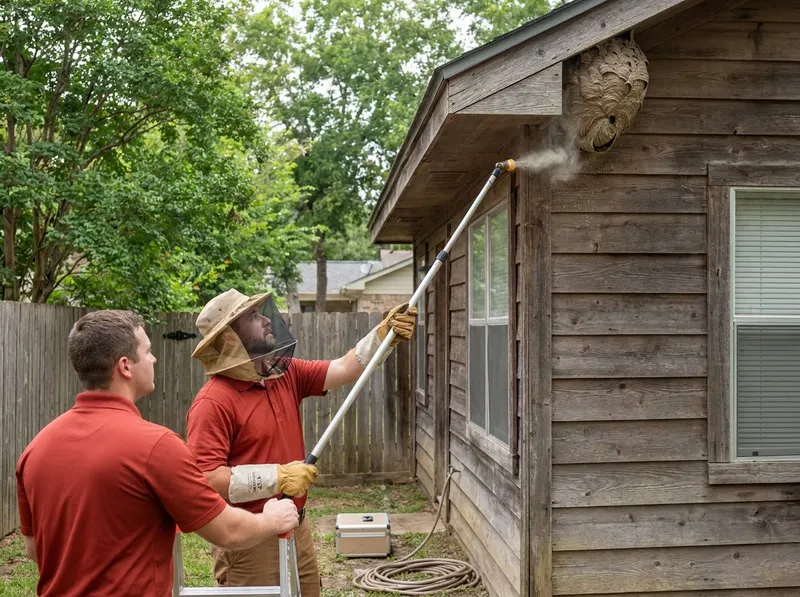
Paper wasps (Polistes), yellowjackets, bald-faced hornets, and mud daubers construct aggressive defensive nesting structures underneath residential roof eaves, porch ceilings, decorative shutters, utility meters, and playground playsets, presenting acute sting dangers to property occupants. Professional stinging insect removal begins with positive species identification and risk assessment of the structural nesting site. Technicians utilize telescoping extension delivery equipment to inject instant-knockdown contact aerosols and long-lasting residual insecticidal dusts directly into the nest matrix and surrounding structural voids. Once active defending wasps are neutralized, the physical nest structure is detached, scraped clean, and removed from the surface to prevent secondary scavenging by carpet beetles or ants. The surrounding attachment point is treated with micro-encapsulated repelling formulations that prevent surviving queens from reconstructing new nests in identical architectural recesses.
View details →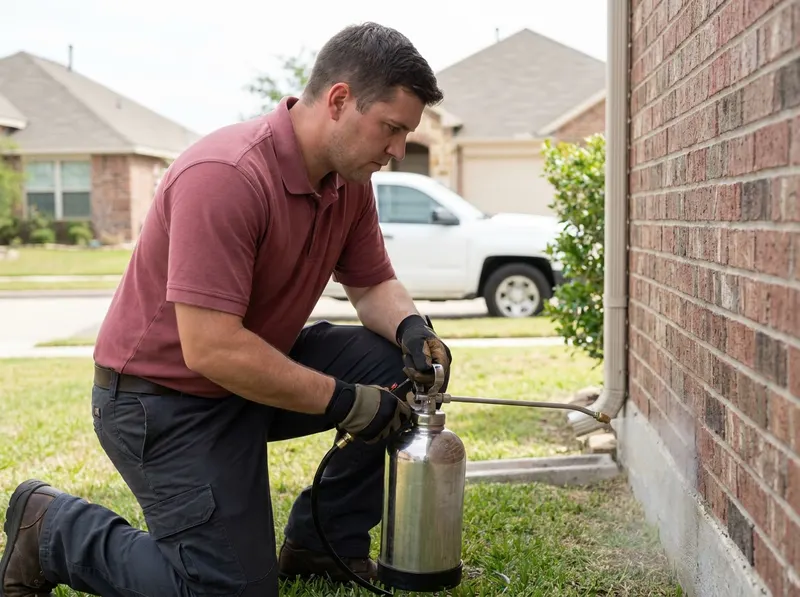
Continuous environmental pest pressure from shifting seasonal weather patterns demands proactive perimeter defense against migrating crawling insects such as field crickets, earwigs, silverfish, millipedes, and ground beetles. Quarterly exterior perimeter maintenance creates an unyielding multi-tier chemical barrier around the structural foundation envelope without requiring technician access to indoor living spaces. The treatment involves applying a liquid barrier band measuring three feet up the foundation wall and six feet out across the soil and mulch perimeter, establishing a lethal contact zone for foraging pests. Foundation weep holes, window wells, exterior spigots, electrical entry boxes, and door thresholds receive targeted dry dust injections and water-resistant granular bait placements. Technicians also clear spider webs and egg sacs from exterior soffits, porch ceilings, and light fixtures, maintaining an impenetrable structural defense year-round.
View details →A professional pest control service in Bryan is a specialized residential defense program that identifies biological entry points, eliminates active insect and rodent infestations, and creates a residual exterior perimeter barrier around Brazos County structures.
You get a firm, itemized quote for your pest control service before any work begins — no surprises, no pressure.
Careful prep, tidy work, and a full cleanup when we are done. We treat your home and belongings like our own.
The same trusted, background-checked team from the first call to the final check.
Choosing the proper pest defense strategy depends entirely on structural entry severity, pest species biology, and whether infestation pressure originates outdoors or inside wall cavities. If you notice isolated outdoor pest activity around your foundation, flower beds, or patio perimeter, choose exterior barrier defense to maintain an unyielding chemical and physical barrier that stops insects before they breach the building envelope. If you discover active indoor sightings in kitchens, pantries, bathrooms, or attic crawlspaces, choose comprehensive interior eradication paired with physical entry-point exclusion to purge nesting harborage sites immediately. The trade-off between exterior-only maintenance and full interior remediation centers on structural preparation, room clearance, and installation labor: perimeter treatments require zero indoor disruption or furniture moving, whereas active interior remediation requires clearing baseboard perimeters, emptying affected pantry cabinets, temporarily vacating treated rooms during application drying windows, and conducting detailed structural sealing along concealed plumbing penetrations, electrical conduits, and attic rooflines. If subterranean termites threaten the structural lumber of a slab or pier-and-beam home, trenching and liquid soil saturation provide five to ten years of uninterrupted subterranean protection, whereas localized spot treatments cost less initially but leave untreated foundation sections vulnerable to subterranean colony foraging. For biting lawn pests such as red imported fire ants and fleas, full-yard broadcast baiting achieves systemic colony suppression across the entire lot, whereas single-mound spot drenching provides immediate local knockdown but allows satellite queens to establish new colonies along property fence lines. Selecting the appropriate intervention ensures that chemical residual profiles match target pest reproduction cycles while eliminating unnecessary interior chemical applications.
Every project gets a firm, written price after a free on-site visit. Ranges below for orientation.
Tell us about your pest control service job and we'll send a clear, written quote — usually the same day. Or just call and talk to a real Bryan pro.

Residential properties across Bryan encounter severe biological and environmental pest pressures driven by the dense Post Oak Savannah ecosystem, intense Brazos River basin humidity, and expanding residential construction corridors along State Highway 21, FM 158 (Boonville Road), and North Texas Avenue. The region is defined by highly expansive Blackland Prairie clay soils and sandy loam pockets that expand during heavy spring rainfall and contract severely during hot Texas summers. This continuous soil movement creates hairline foundation shifting and separation gaps along brick veneer weep holes, concrete grade beams, and expansion joints in established neighborhoods like Greenbrier, Austin's Colony, and Historic Downtown Bryan. These structural fissures provide immediate subterranean access routes for subterranean termite foraging tubes, smoky brown roaches, and aggressive roof rat populations seeking shelter from extreme outdoor temperatures. Furthermore, mature pecan, live oak, and post oak canopies bordering properties near Sue Haswell Memorial Park, Travis B. Bryan Midtown Park, and the Blinn College - Bryan Campus provide elevated runways allowing rodents and tree-dwelling ants direct access to roof eaves and unsealed soffit vents. Implementing deep liquid foundation trenching, gnaw-proof galvanized steel weep hole covers, and high-residual exterior micro-encapsulated perimeter barriers ensures lasting defensive structural integrity against intense Brazos County pest migrations.
 Sarnova Pest Defense